Foshay's Folly: The Downfall of Wilbur B. Foshay
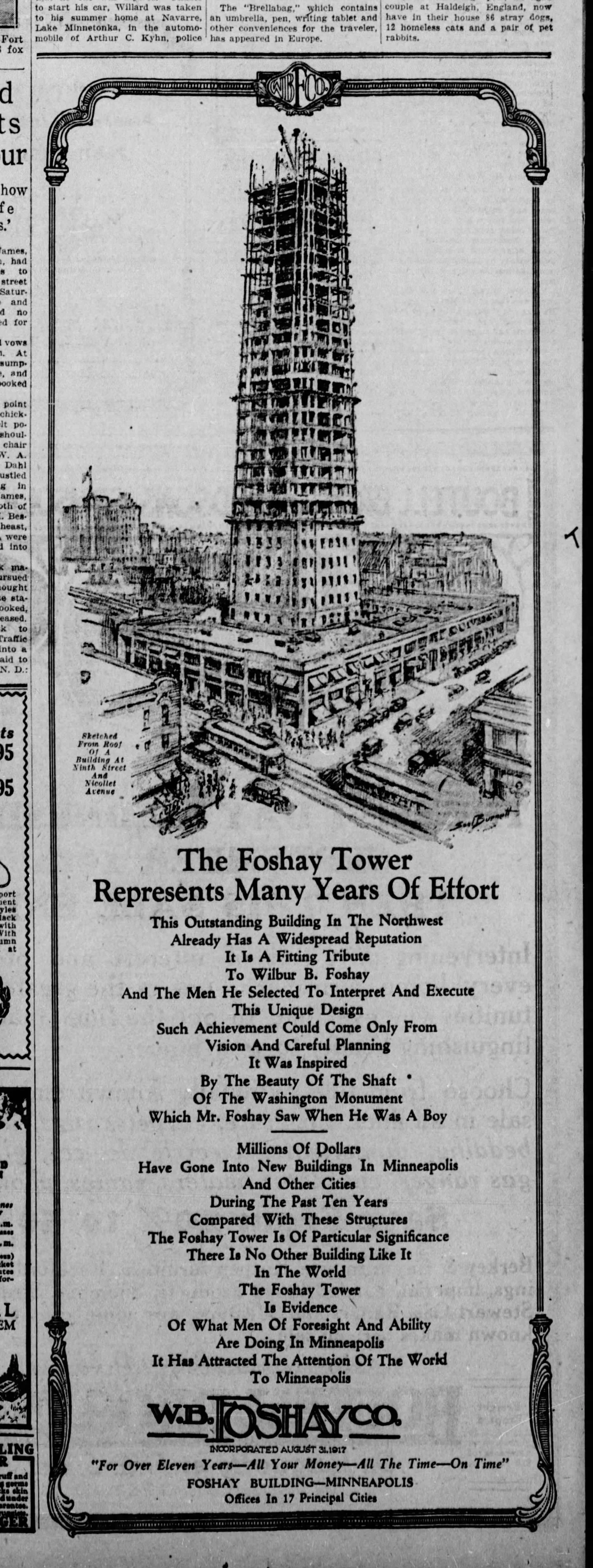
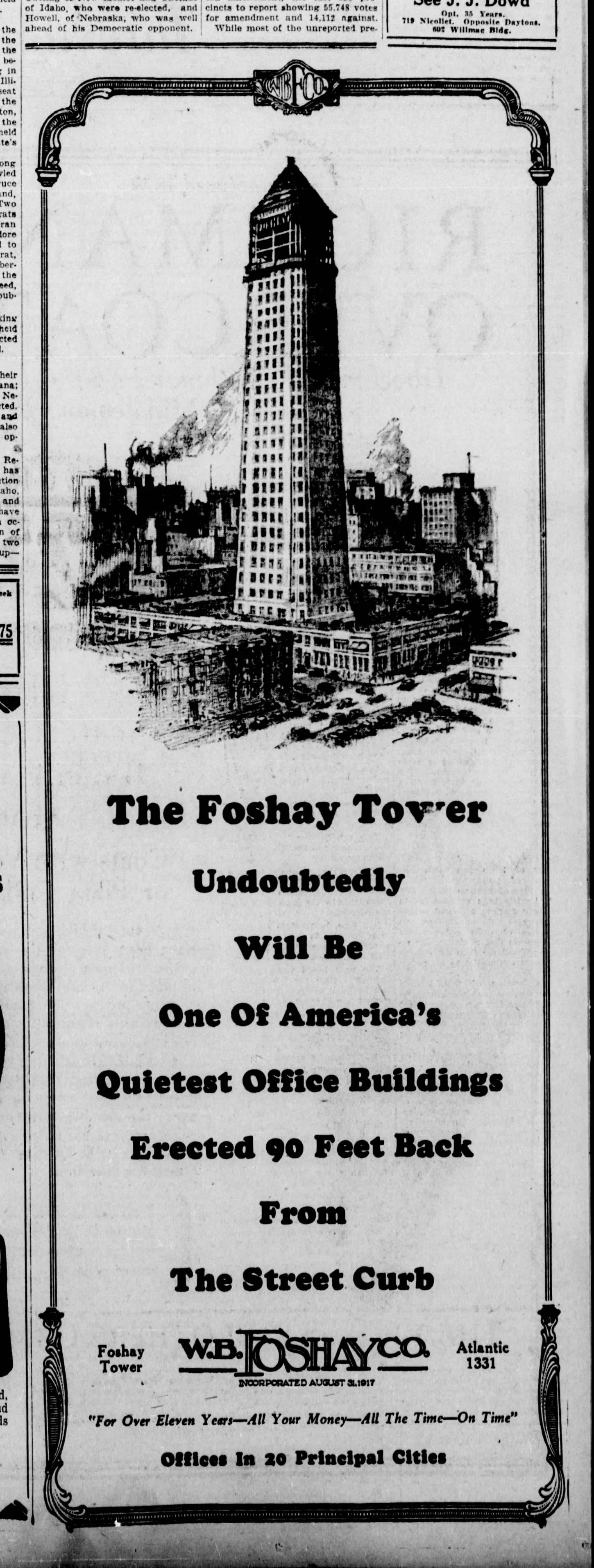
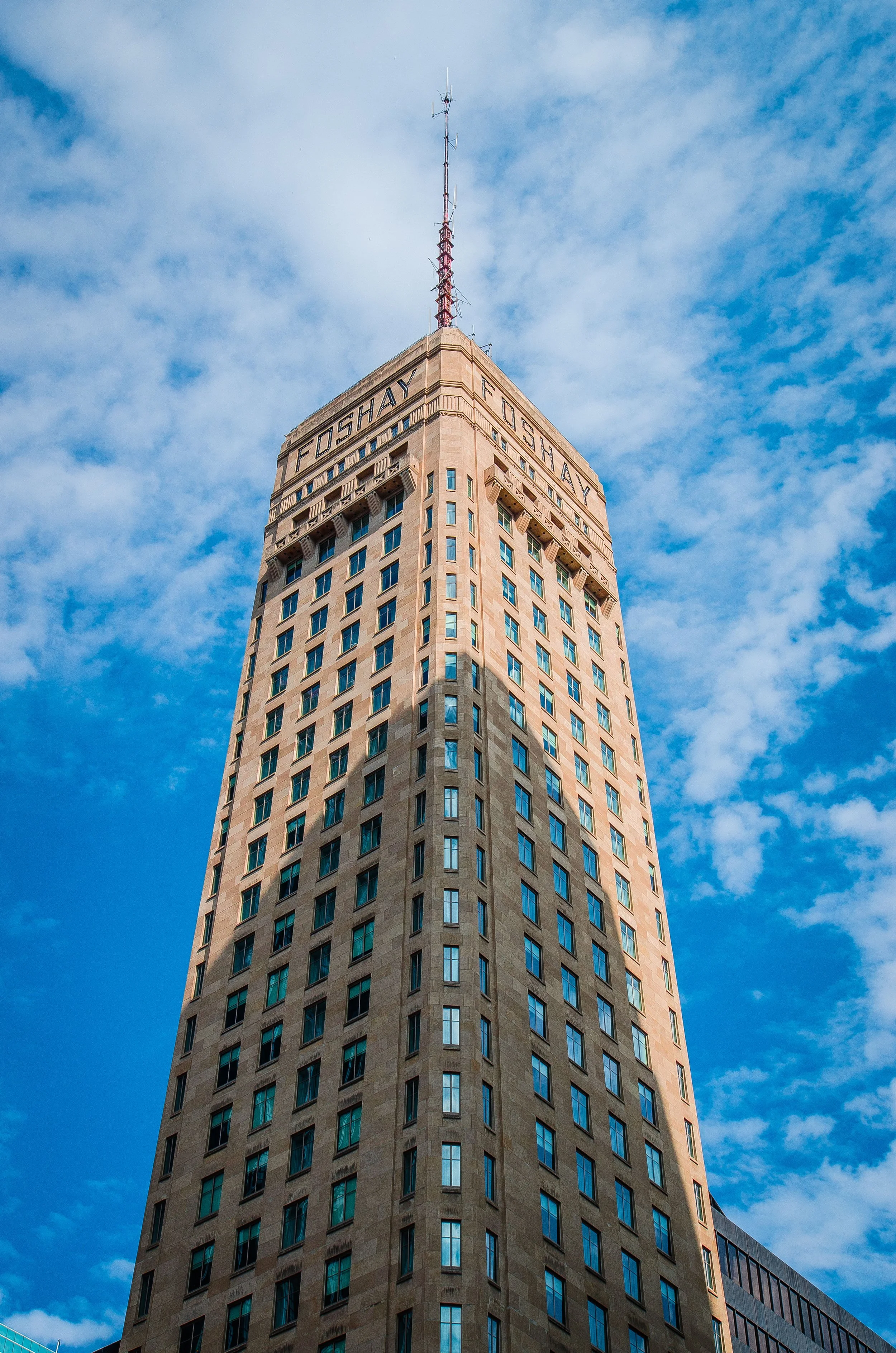
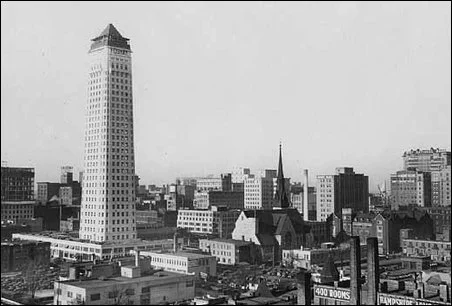
The word “iconic” is probably one of the most overused and misused words in American English. It’s thrown around for just about anything these days along with “literally” and “amazing”. If you were going to use the word “iconic” appropriately you could certainly use it when describing the Foshay Tower in Minneapolis. The first skyscraper built west of Chicago, it didn’t just dominate the skyline, it WAS the skyline. Featured on postcards and collectibles, the 32-story tower’s image became synonymous with Minneapolis. THAT is iconic.
The building was the pet project of Wilbur B. Foshay. Born in New York, Foshay bounced around America as a young man. He visited Washington D.C. and was awestruck by the Washington Monument. He visited Hutchinson, Kansas and married a young woman whose last name, not coincidentally, was Hutchinson. With family money, the couple moved to Olympia, Washington where Foshay built his first web of utility companies. A few years later, he went bankrupt and left his investors high and dry.

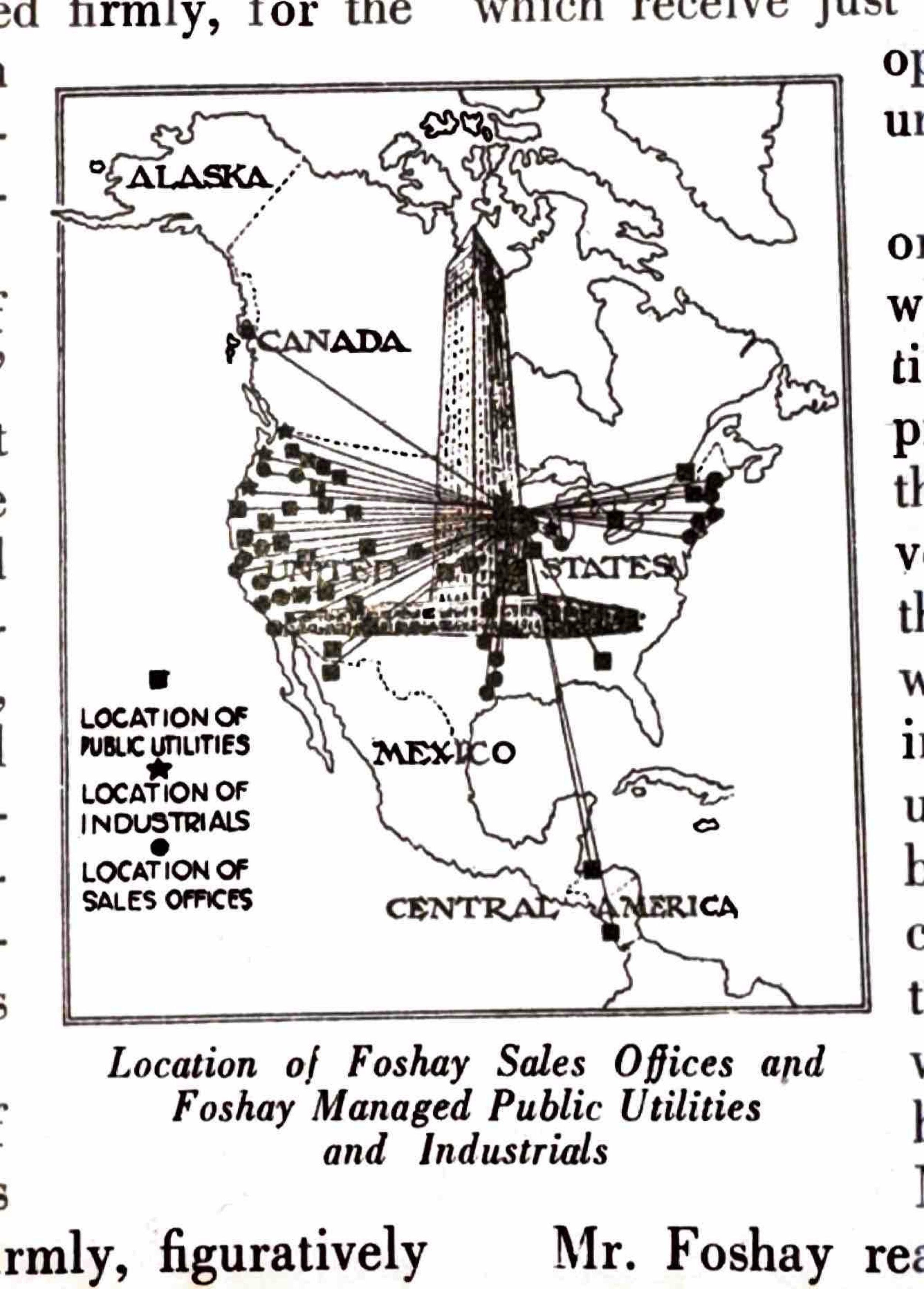
Next stop, Minneapolis, which was a booming mill city with lots of manufacturing opportunities. There was also a burgeoning need for municipal utilities: gas, electricity, water. Foshay bought a small company with a $6,000 loan. When it made a profit, he used it to buy another and then some more. More and more turned into selling the entire network at a big profit and starting over again. He was on his third empire of utilities by 1927 and his holdings spanned 42 states and 5 countries. Foshay’s net worth was estimated at $20 million (which with inflation would be around $371 million today).
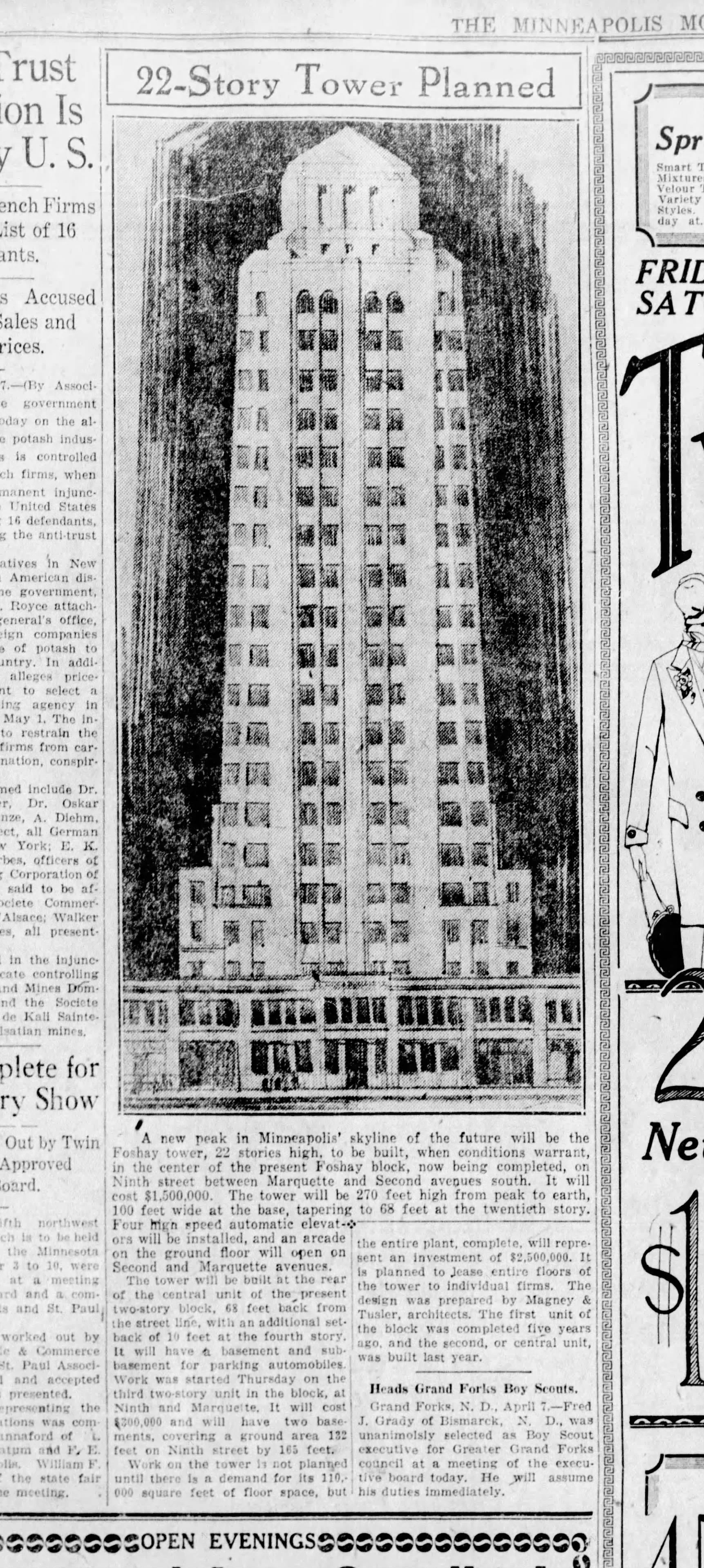
On the 10th anniversary of starting his business, Foshay announced his plans to fulfill his dream to build a Washington Monument for the midwest. The city was on his side, because they had just repealed the city ordinance limiting the height of buildings to 12 stories tall. Foshay planned to go 10-stories higher with 22 floors. When it was announced that Foshay’s competitors, the Rand Corporation, was about to begin construction on the 26-story Rand Tower, Foshay’s 22 became 28. Twenty-eight became 30 and then he finally settled on 32 stories.
Most of the new building would be taken up with shops and offices, but floors 27 and 28 would be the apartment and offices for Wilbur B. Foshay. All of the finest building materials were sourced: Italian marble, African mahogany, gold-plated fixtures. Multiple sculptures and artworks were commissioned. Four high-speed elevators would whisk riders up and down. Four levels of basement would accommodate the boilers and a motor court able to park, store and service over 150 cars.


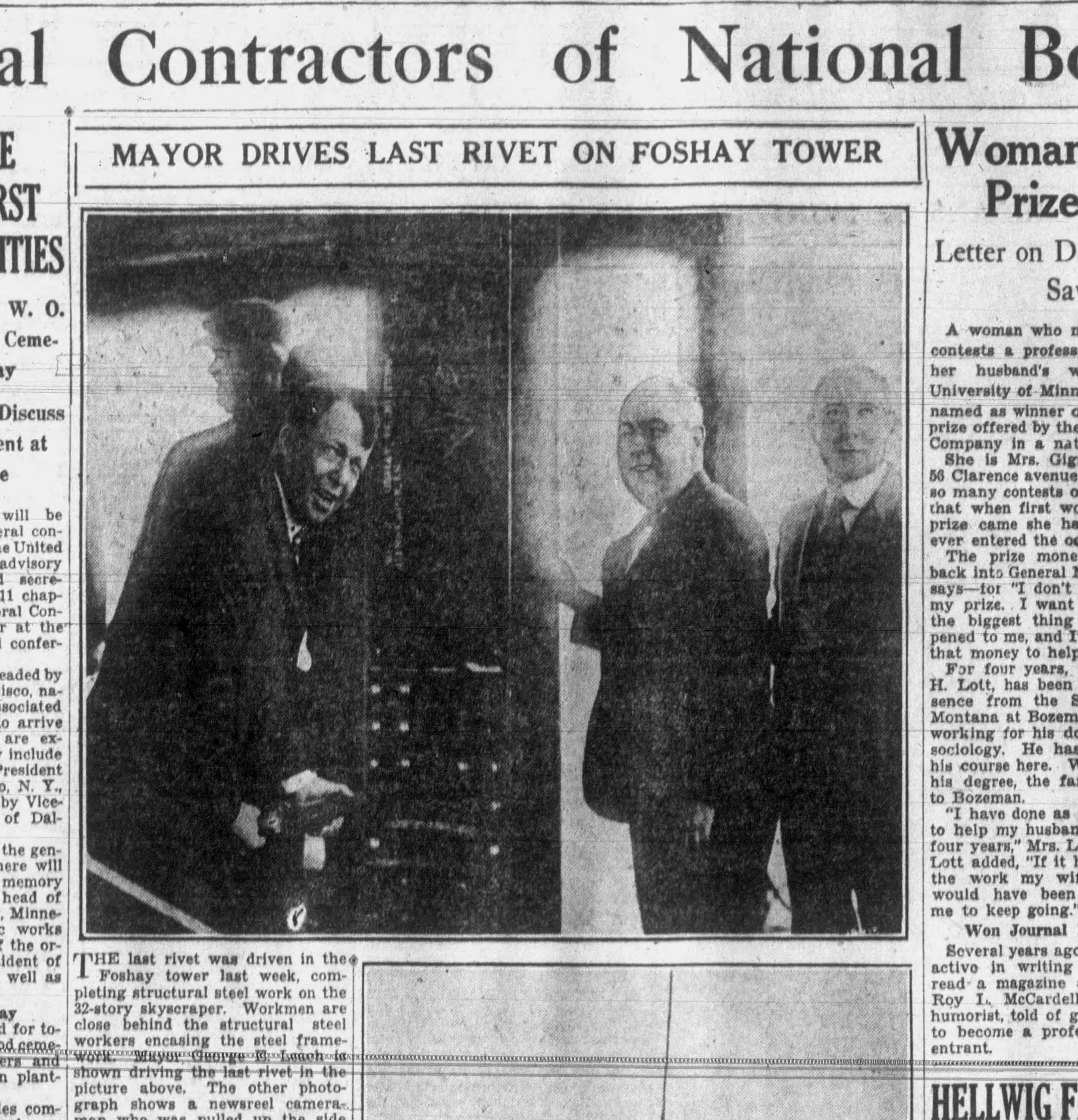
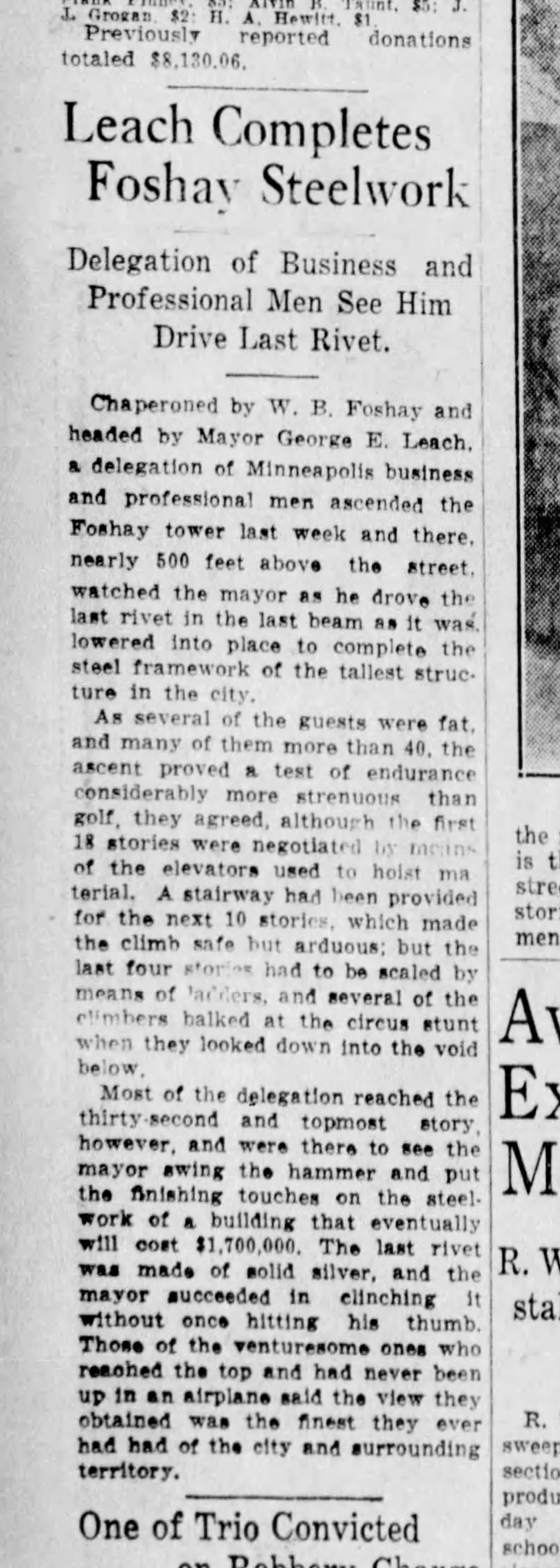
In 1928, one year into construction, Foshay and a group of city dignitaries ascended the steel skeleton of the tower. Freight elevators got them up to the 18th floor, but they had to climb steps up the next 10. At floor 28 they were met with ladders and not everyone decided to continue. Up the last 4 floors went Foshay, George E. Leach (the mayor of Minneapolis) and a few other brave souls. They all watched as Leach drove in the symbolic silver rivet that completed the metal framework so construction could continue. They congratulated themselves on their achievement and posed for pictures taken by a cameraman who was suspended from a wooden platform dangling 30 stories above the street.

The climbing party had good reason to be nervous. Two separate construction accidents had been fatal for workers on the tower. In September, a steelworker named Raymond Weatherby died of internal injuries he suffered when the hoist he was riding with a load of steel collapsed. In December, a construction worker fell from one level of basement auto storage to the levels below and broke his spine. He also died from his injuries.


A master of promotion (and distraction), Foshay continued to keep up the public interest throughout the 3-year process. Models of the building were set up at the Young-Quinlan Department store. School children sent in essays. Constant advertisements appeared in all of the newspapers providing updates and enticements. Film stars appeared for publicity photos. For the Christmas season in 1928, the entire tower was draped in twinkling lights and a massive red bow. The whole structure was lit up like a Christmas tree and carolers sang from the scaffolding.
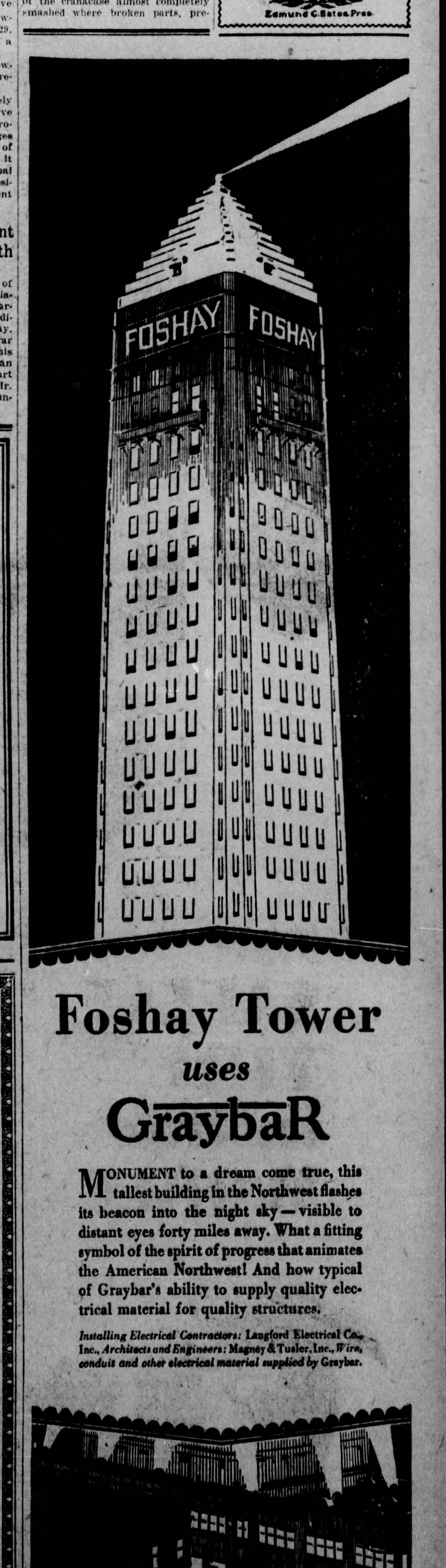
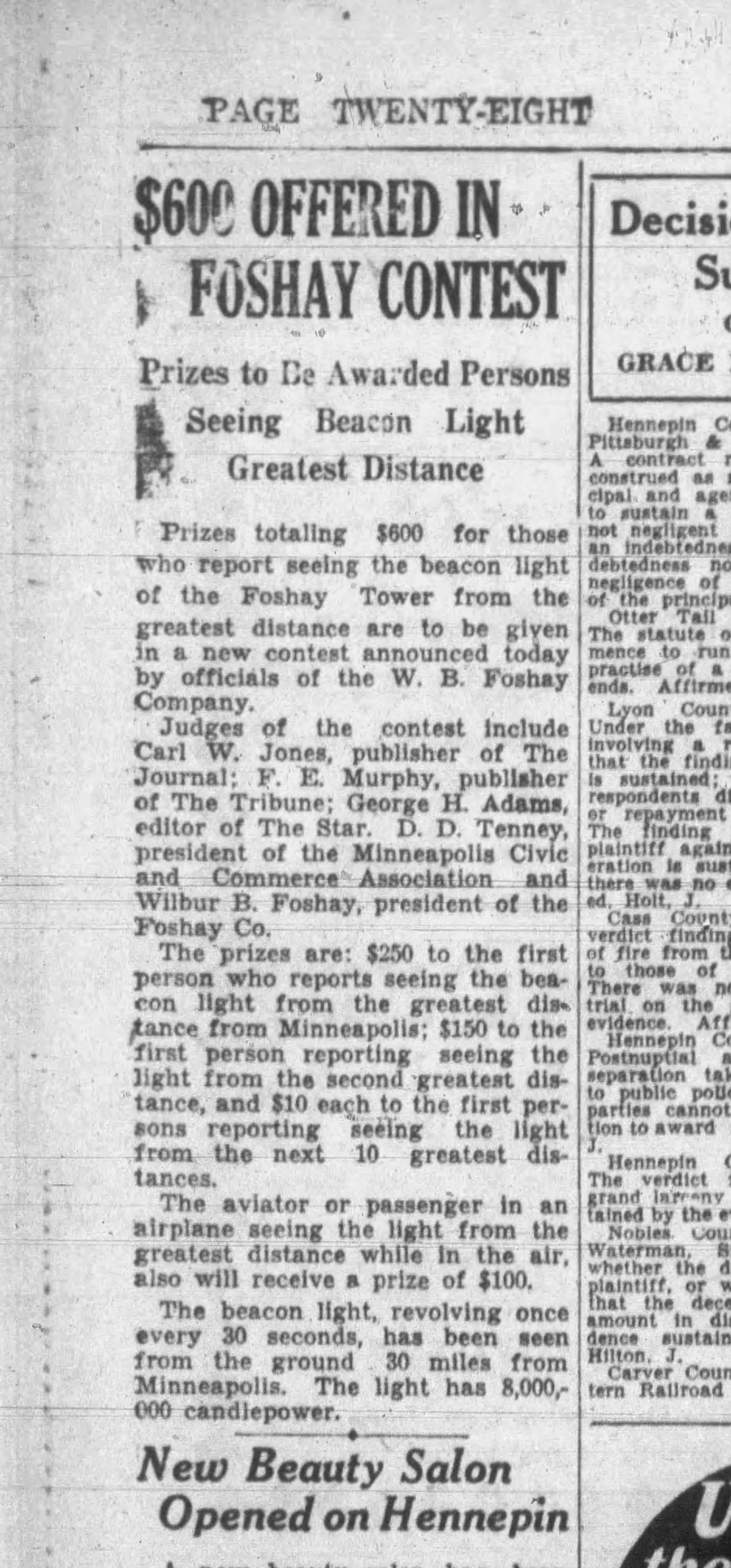
At one point, the design team considered adding a futuristic touch to the tower’s pinnacle: a dirigible mast. That’s right, they imagined floating aircraft like the Goodyear blimp docking at the tower. After further consideration (and realizing there was no way for passengers to depart from the aircraft) that idea was abandoned. Instead, a lighted beacon would crown the top of the tower. When the beacon was lit for the fist time, Foshay awarded a cash prize to the person who could see it the farthest away.




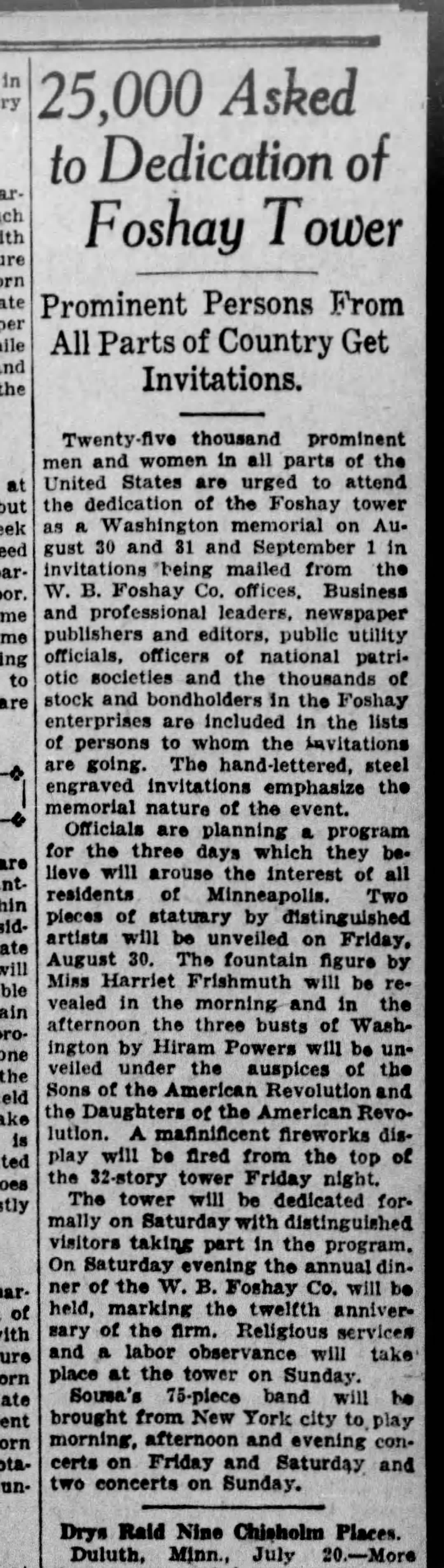
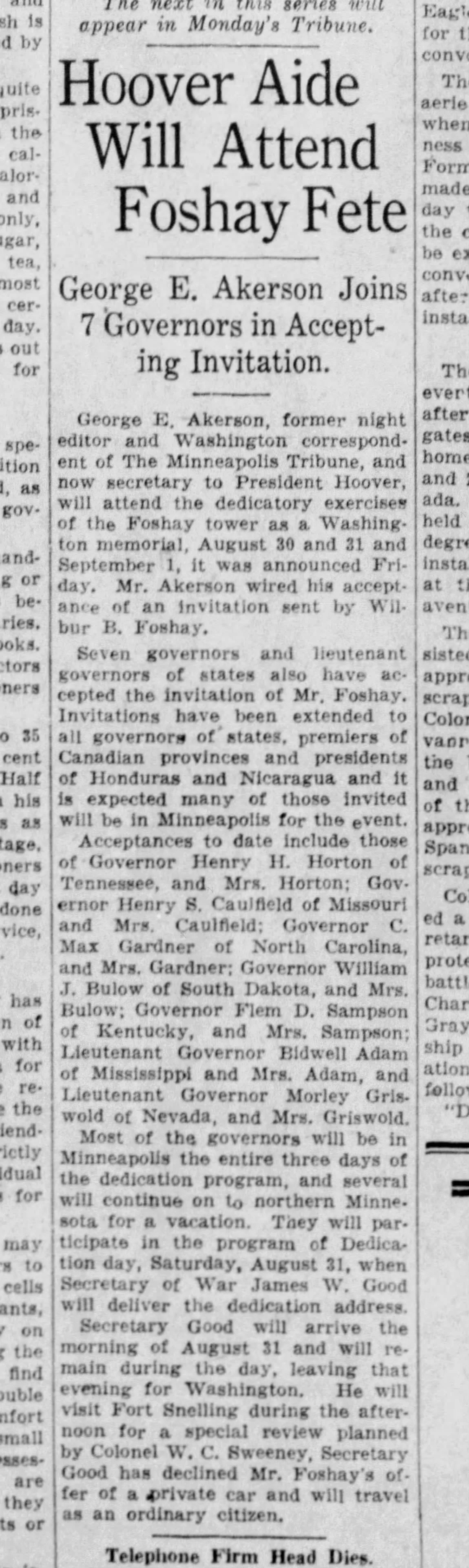
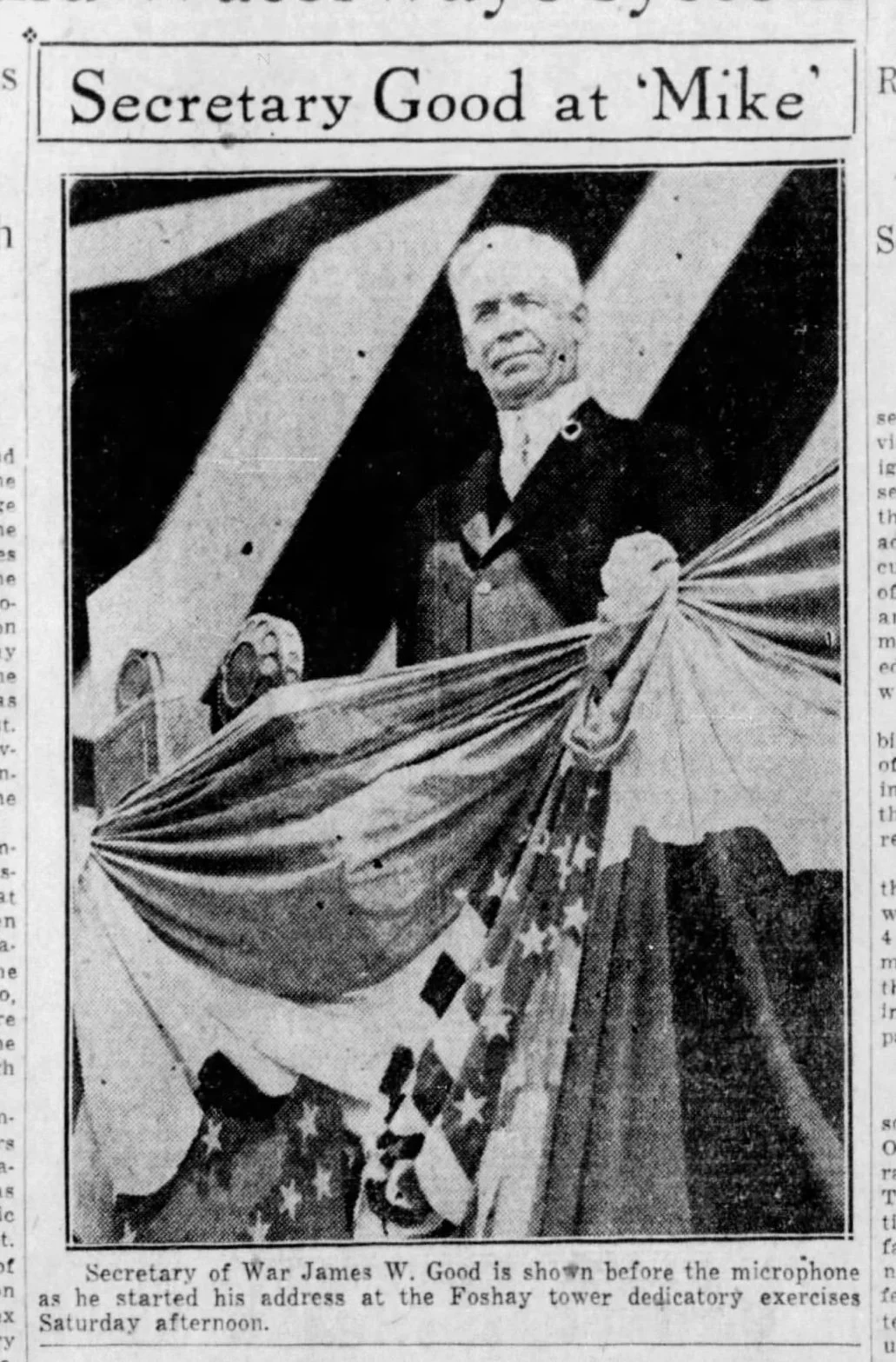
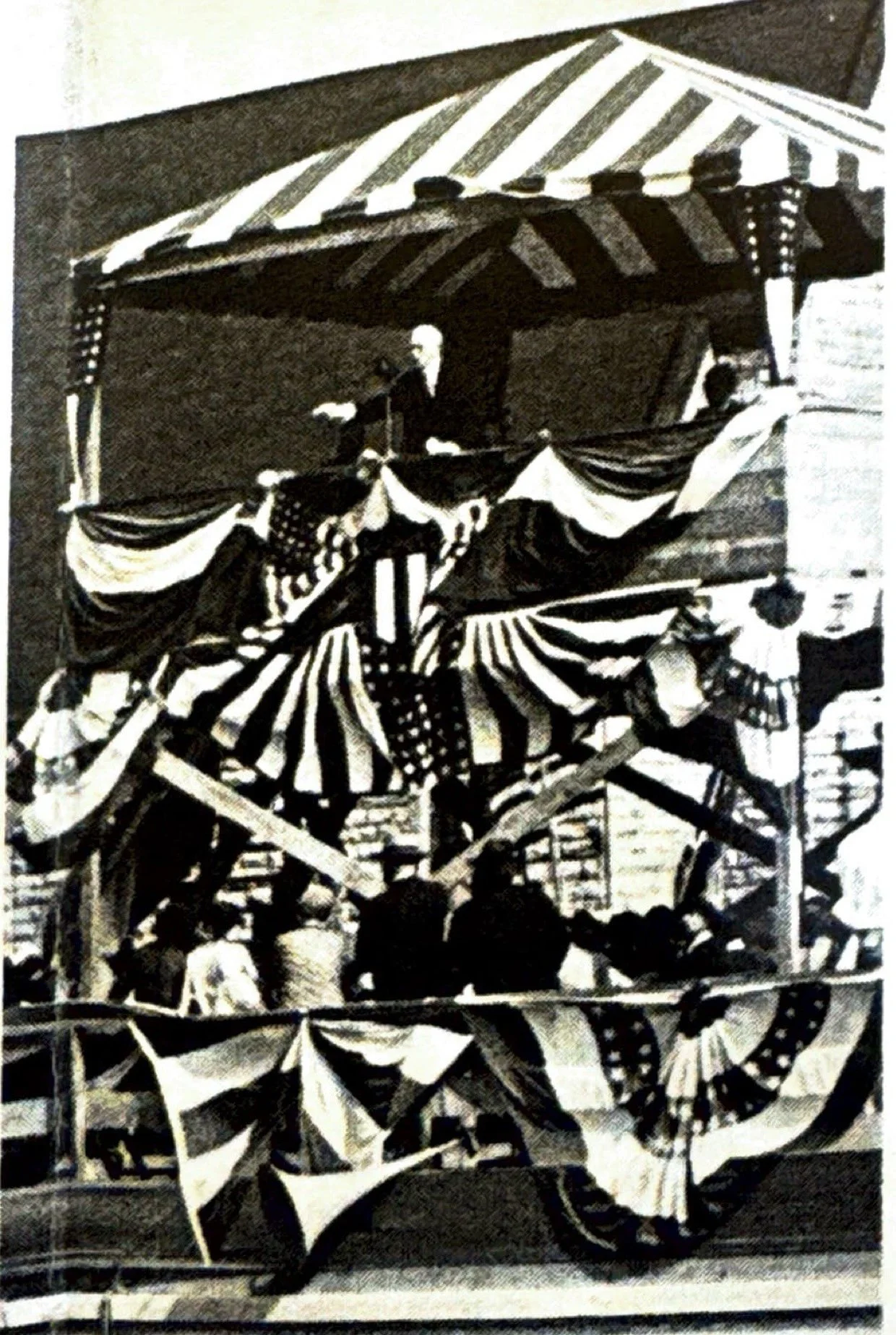
As construction neared completion, Foshay announced a 3-day spectacular to dedicate the monument to Washington (even though it was going to be Foshay’s name in 10-foot tall, illuminated letters on all four sides). August 29, 30, and 31st of 1929 would be the biggest party the city had ever seen. Foshay reportedly invited 25,000 people individually to attend, including the governor of every state. The Secretary of War, James W. Good, gave a rousing speech. Fountains gushed for the first time and sculptures were unveiled.
The American March King, John Philip Sousa, was commissioned to write a march specifically for the event. He didn’t have enough time to write a piece from scratch, so he repurposed one he already had in progress and named it the “Washington Monument-Foshay Tower March”. Sousa led his 75-piece band in 7 concerts over the three days.
It was a glorious event with fireworks and flowers, parades and memorabilia, but it just wasn’t meant to last.



As the dedication ceremonies were celebrated outside, work carried on inside. Finishing touches were still in progress. So, by October 29th, a full two months after the official “opening”, Wilbur B. Foshay hadn’t actually worked in his offices, moved into his new apartments or used his opulent bathroom. He’d never get the chance.
The Great Crash upended the stock market and Foshay’s companies immediately went into receivership. Like thousands of companies and millions of Americans, Foshay couldn’t pay his debts. When the receiver audited the companies’ books, he uncovered suspicious practices that went beyond just moving money around in different accounts. The entire corporate structure had been financed by mortgaging one asset to pay for the next, and the next, and the next, and so on. It was an empire built on nothing. Foshay and his company directors had shifted money from company to company all while lying to their investors about the dividends that they could or would receive for their investments. To assuage nervous investors, they were issuing dividends even though the companies weren’t making a profit. They kept selling stock while they knew the company was about to go into receivership and they did so by mail. That’s mail fraud.
When the stock market crashed and his assets were seized, Foshay disappeared from Minnesota entirely.
Read on to find out what happened when he returned to stand trial.