The Hidden Costs of Minnesota’s ICE Raids
We are hearing the same rhetoric again. The headlines claim that ICE raids in Minneapolis are about "stopping fraud" and "saving taxpayer money." It sounds logical on the surface, but if you look at the history of Minnesota’s economy, the truth is the exact opposite.
These operations don't save money; they burn it. They don’t protect our economy; they dismantle it. How do I know? Because we have a blueprint of exactly what happens when the federal government chooses "surgical force” over sensible reform.
Worthington, Minnesota
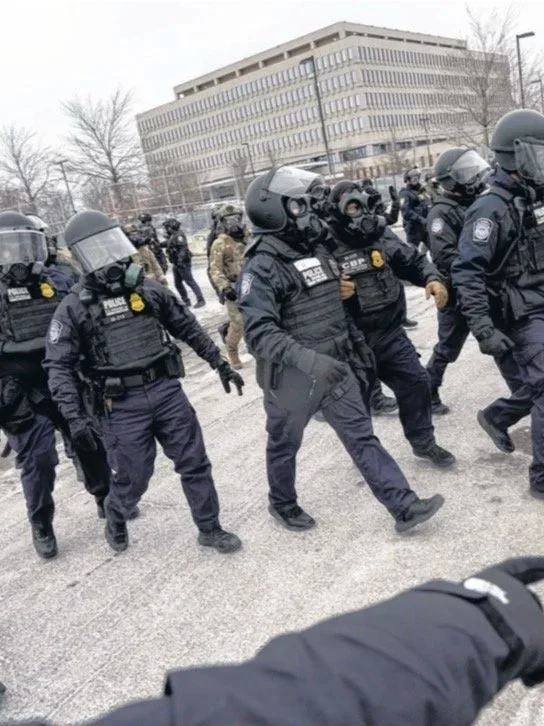
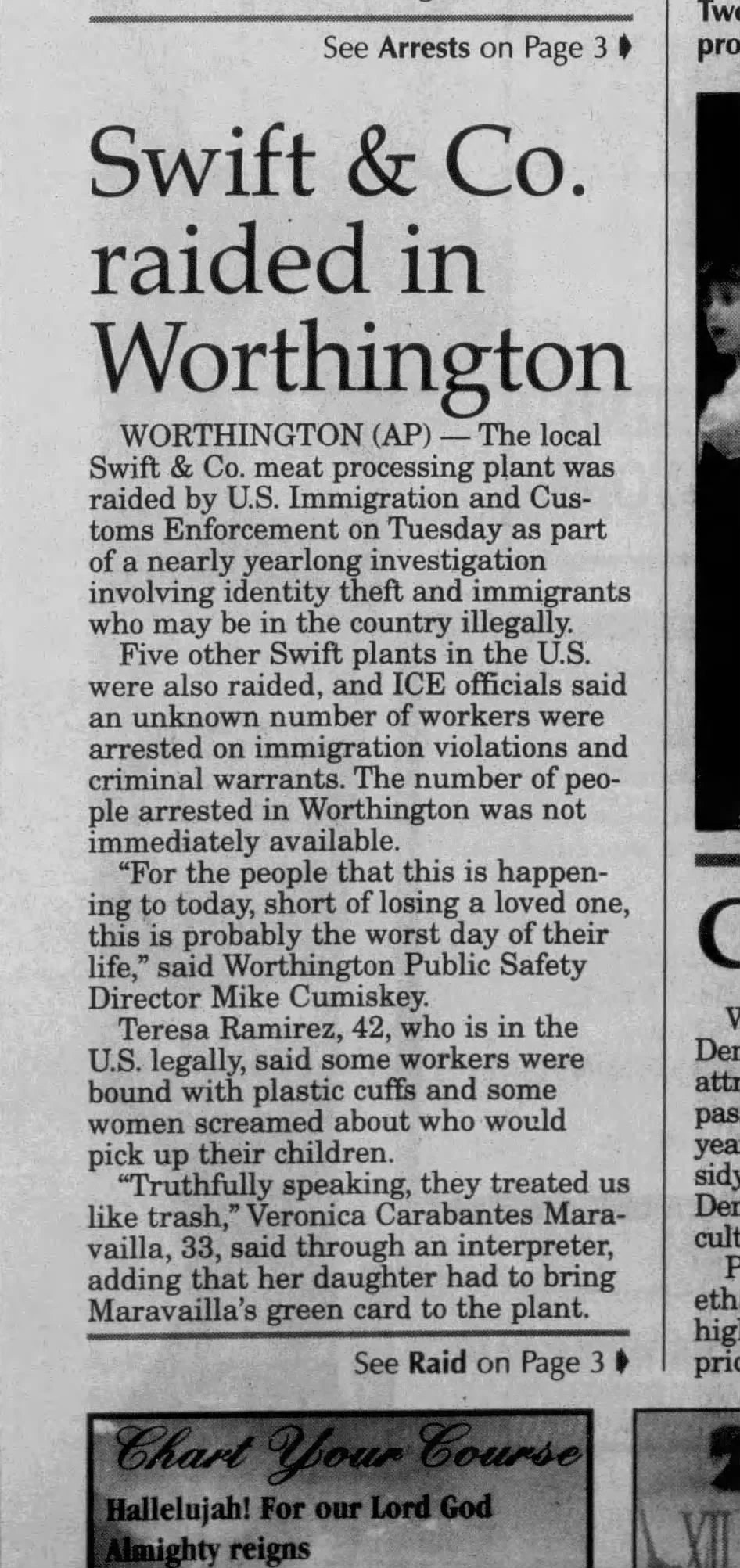
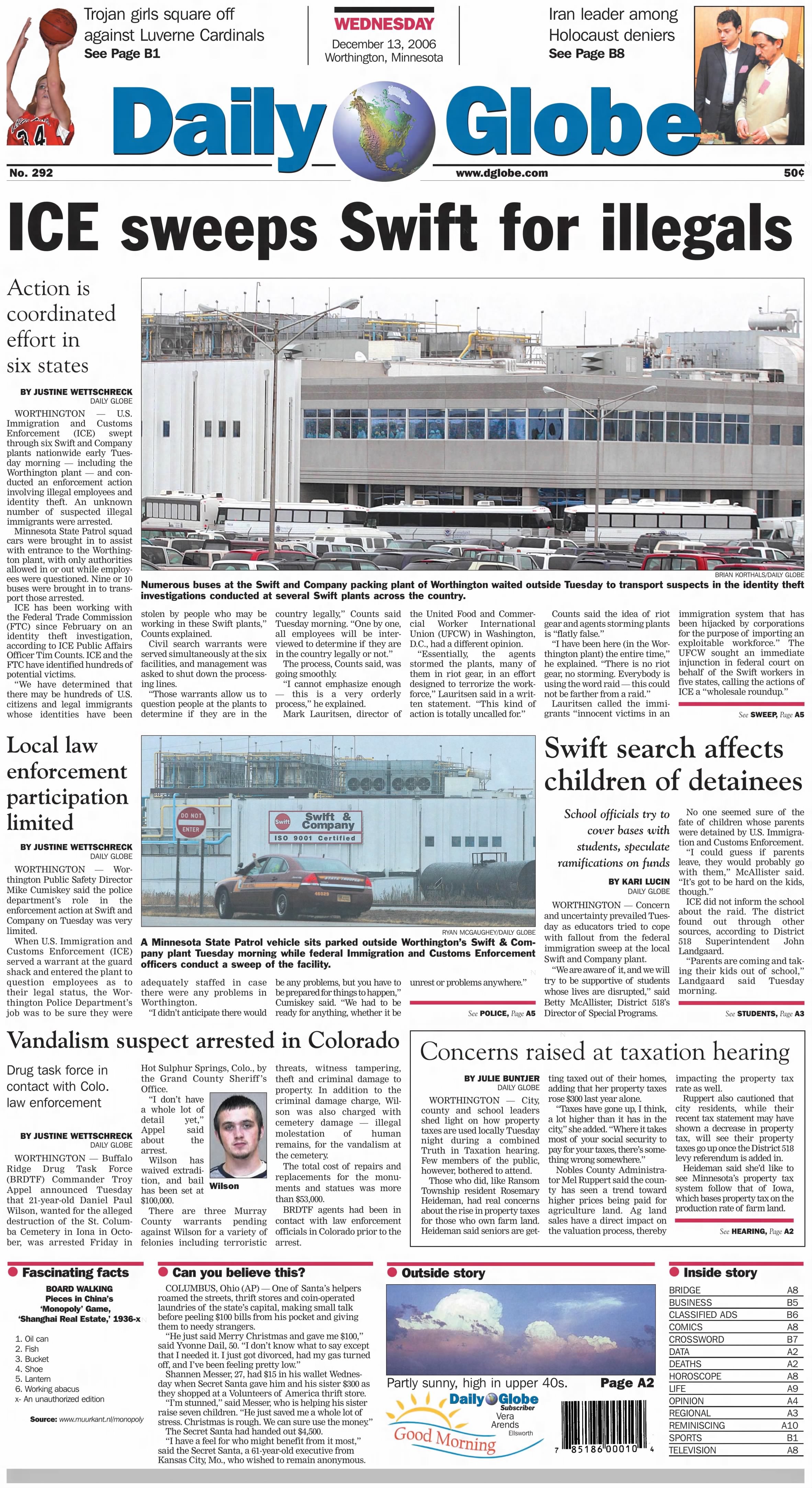
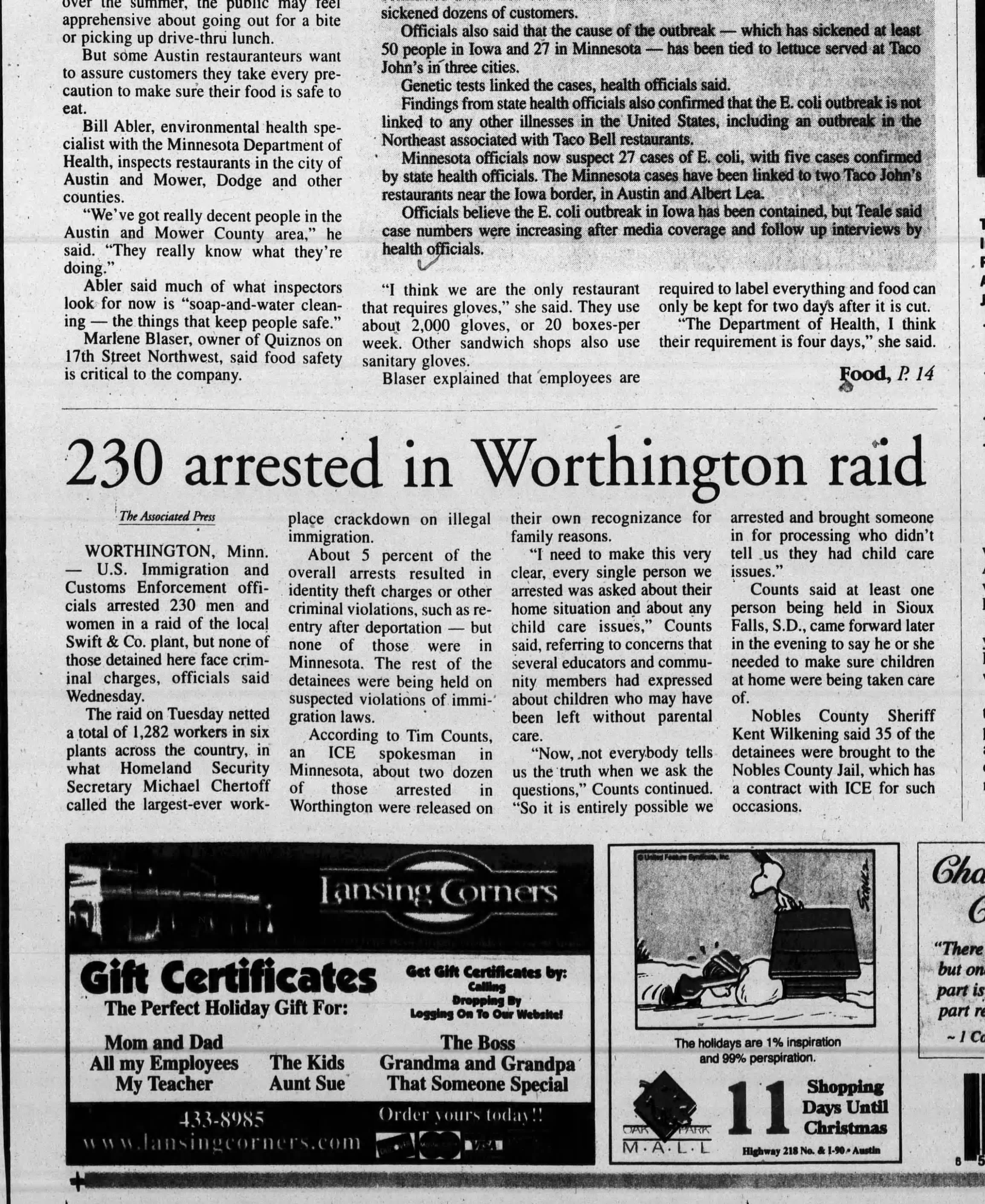
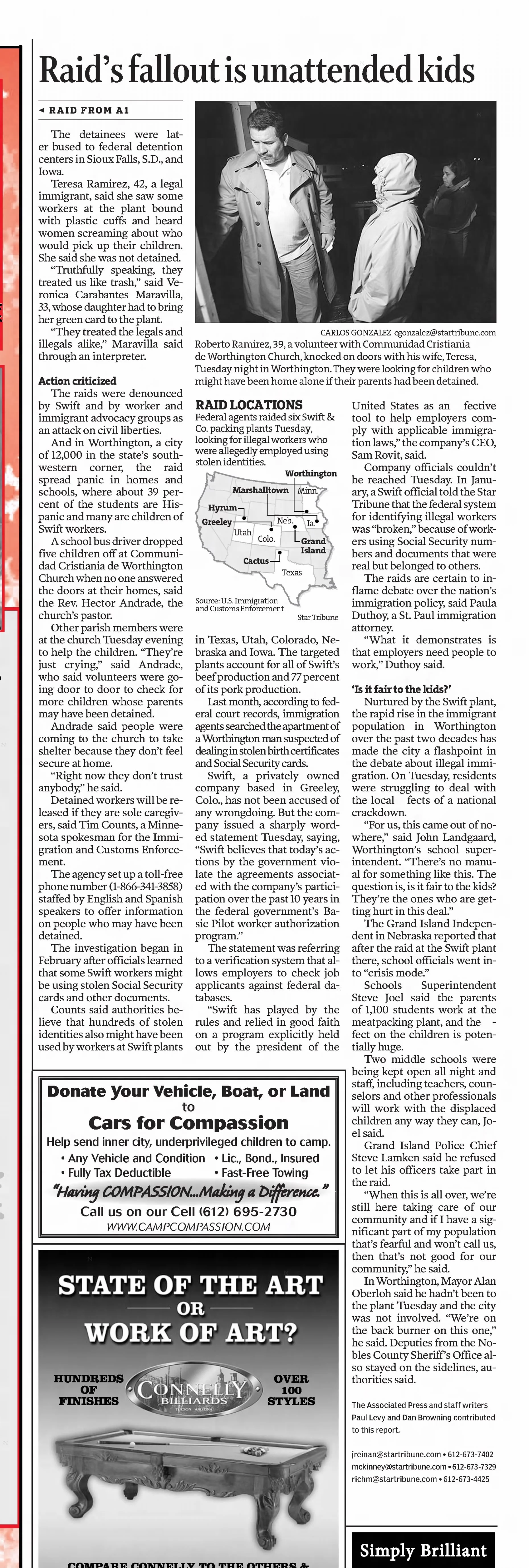
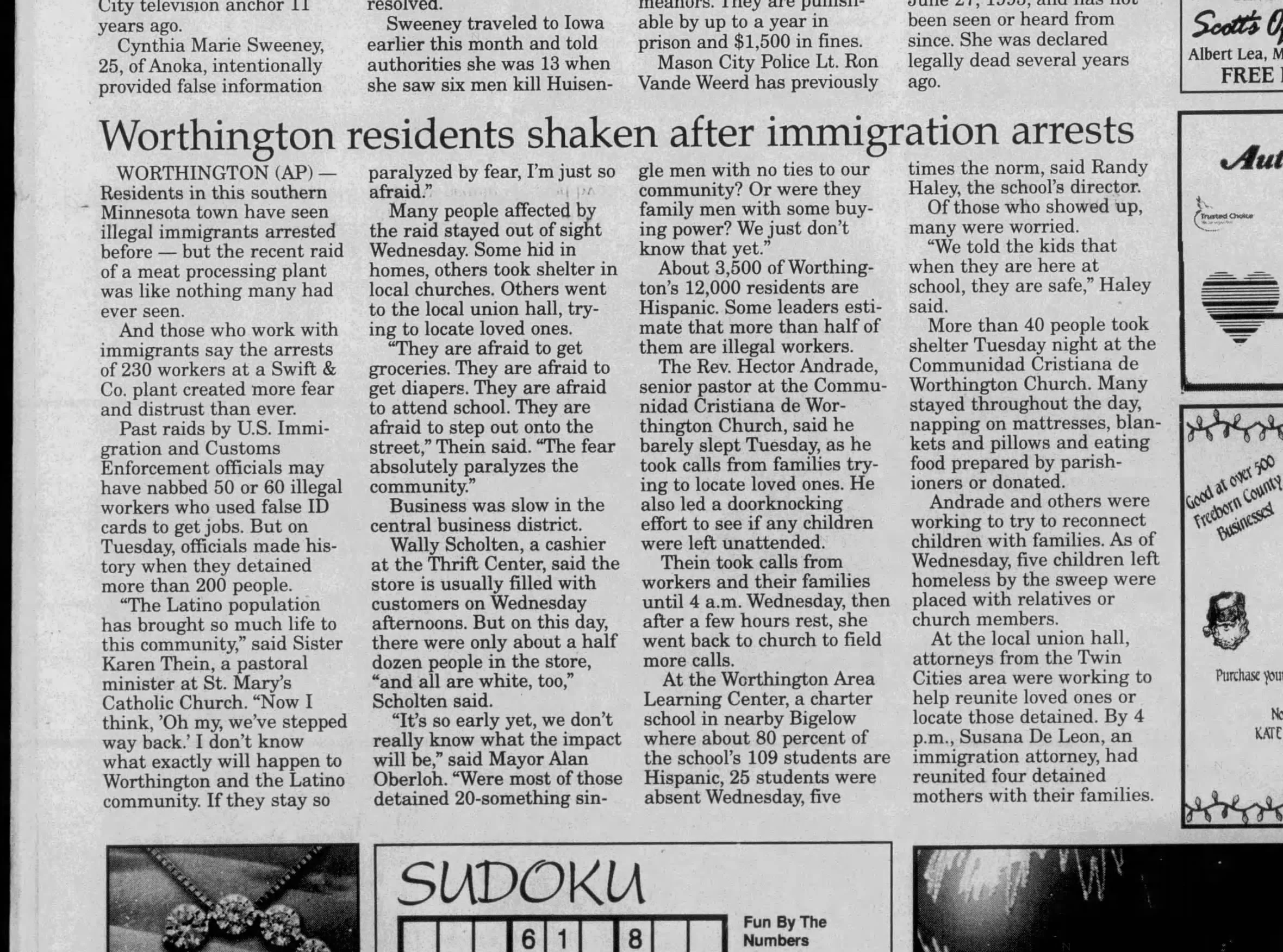
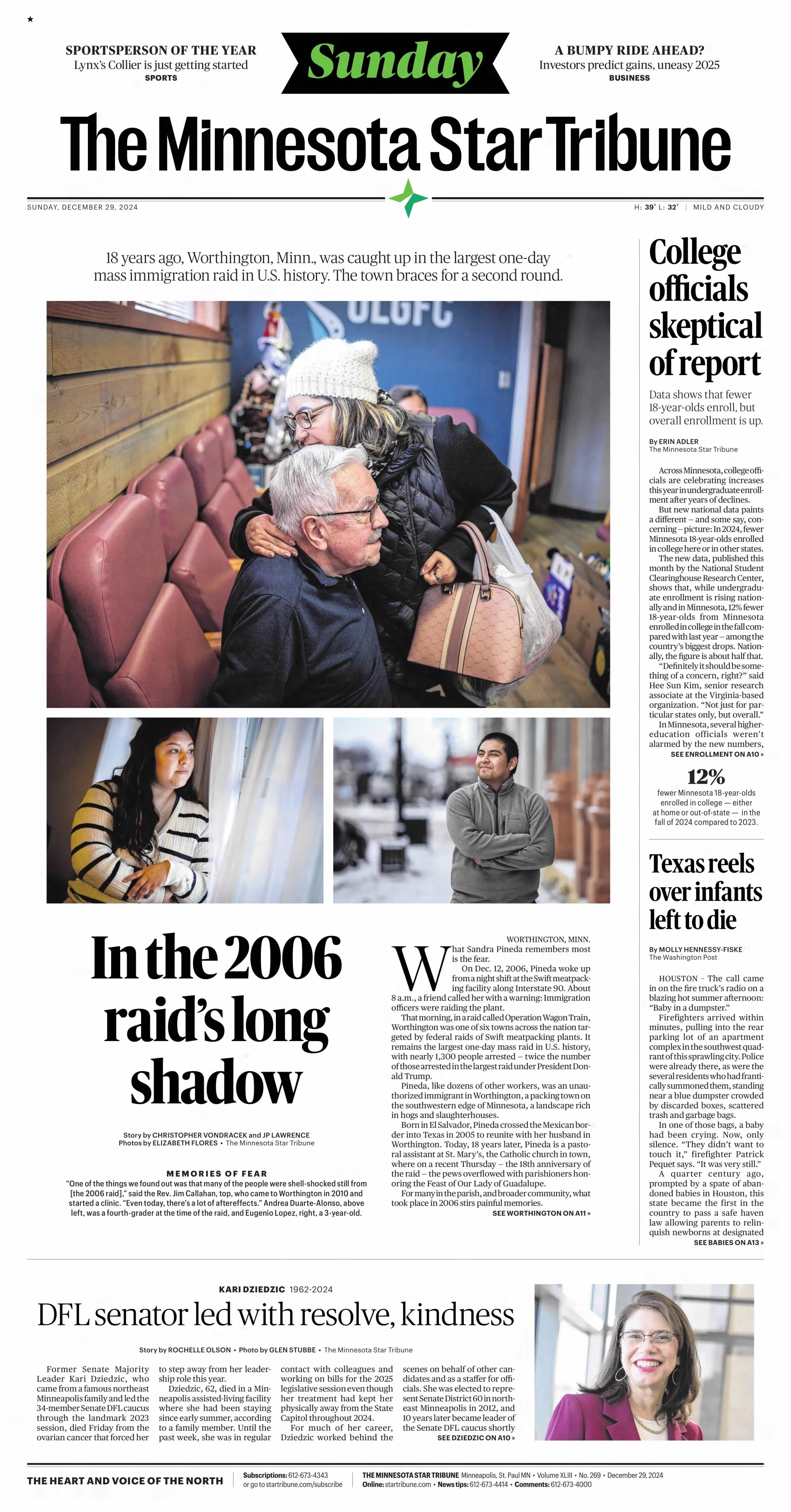
In December 2006, the federal government staged one of the largest work-site raids in U.S. history. Hundreds of ICE agents in riot gear descended on the Swift & Co. meat processing plant in Worthington, Minnesota.
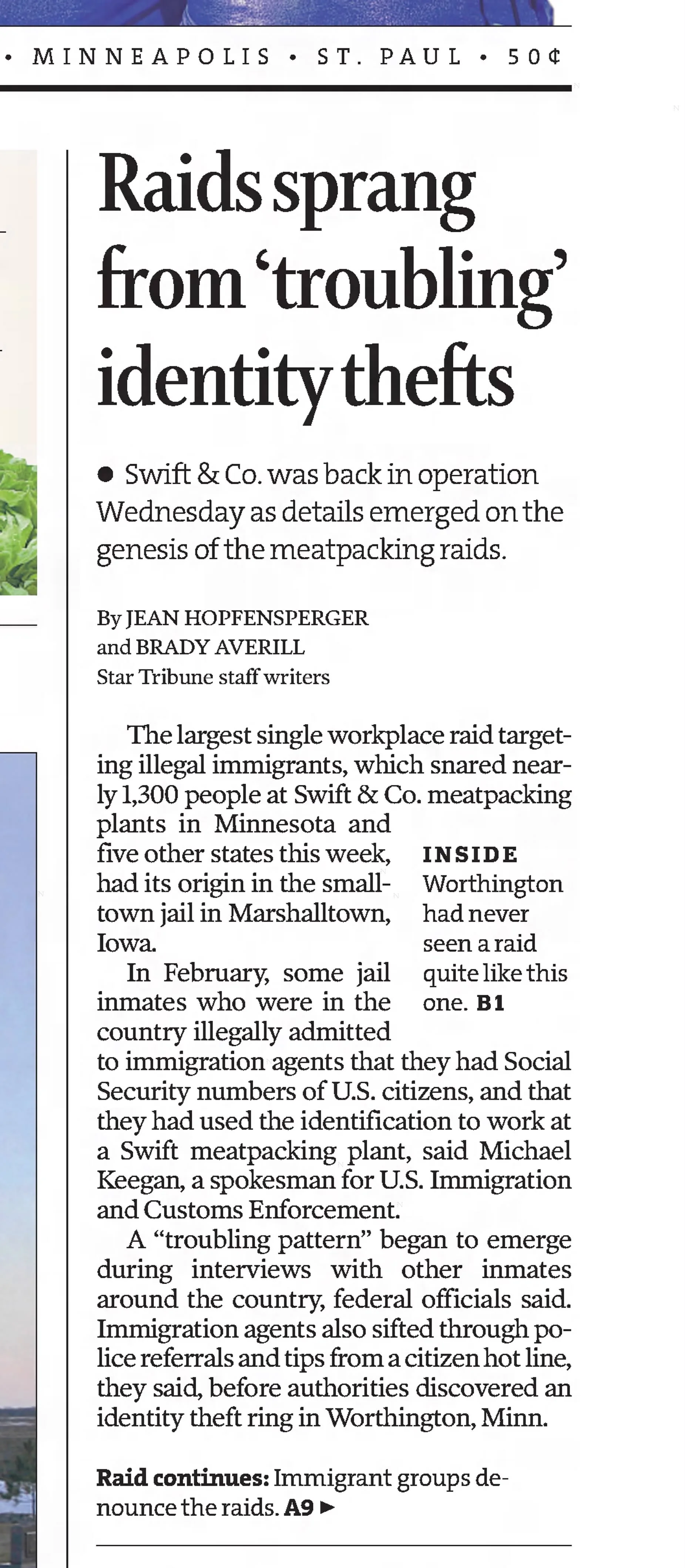
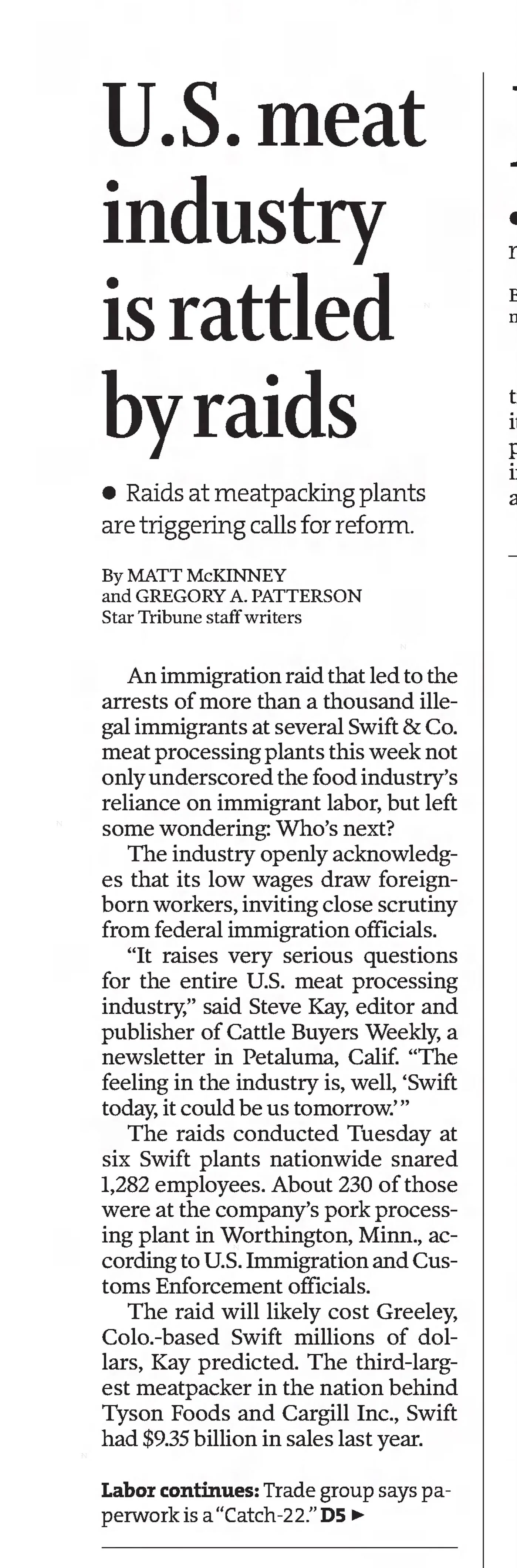
The stated goal was to arrest 20 workers suspected of using stolen social security numbers. But 20 arrests turned into 239. The raid in Worthington was part of a larger one at 6 Swift & Co plants around the country. More than 1200 workers were detained.
Despite ICE claiming they operated with "surgical precision," the reality was chaotic. U.S. citizens were swept up, zip-tied, and detained for hours alongside undocumented workers. The precision was a myth, but the consequences were very real.
Corporate Collapse
The raid didn't just affect the workers; it paralyzed the company.
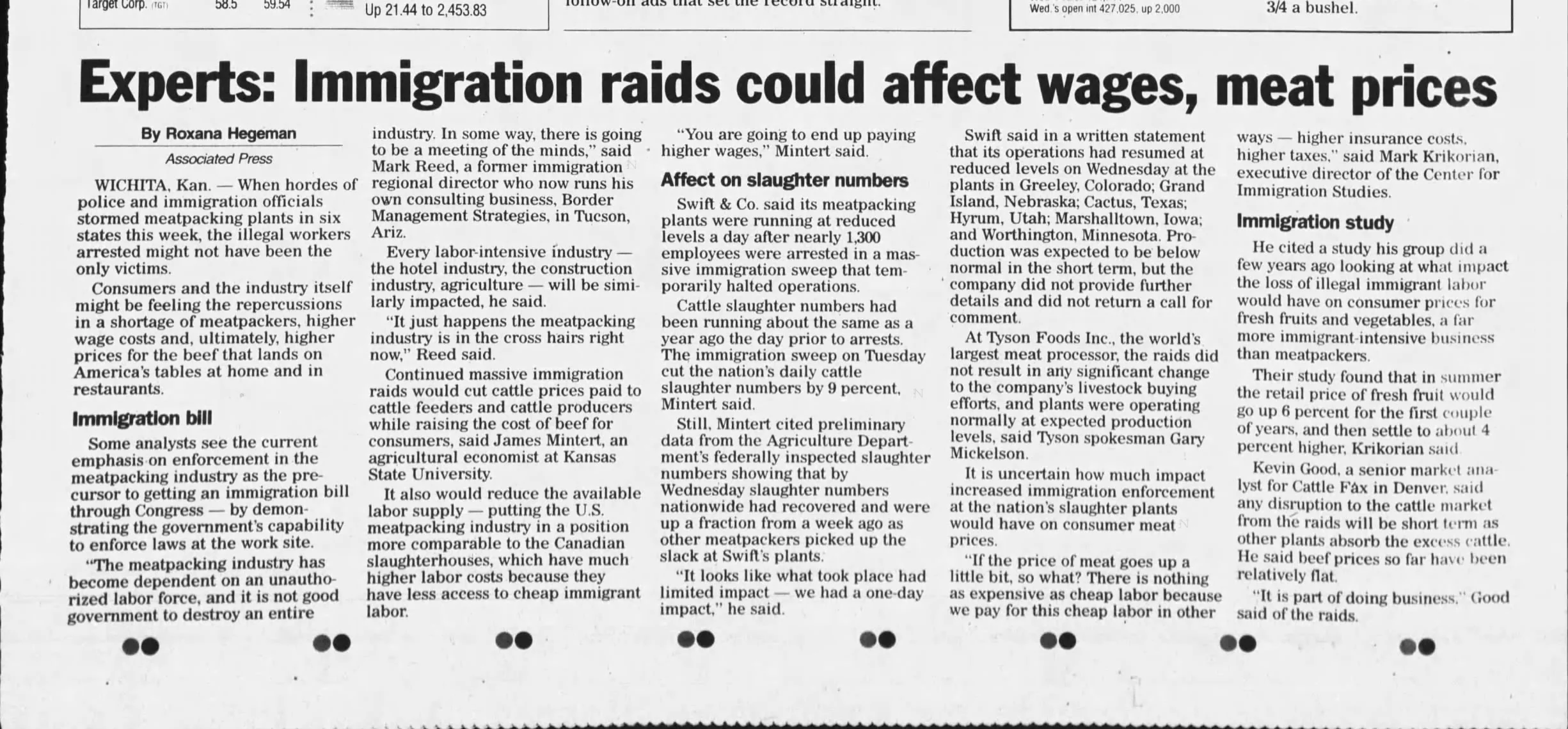
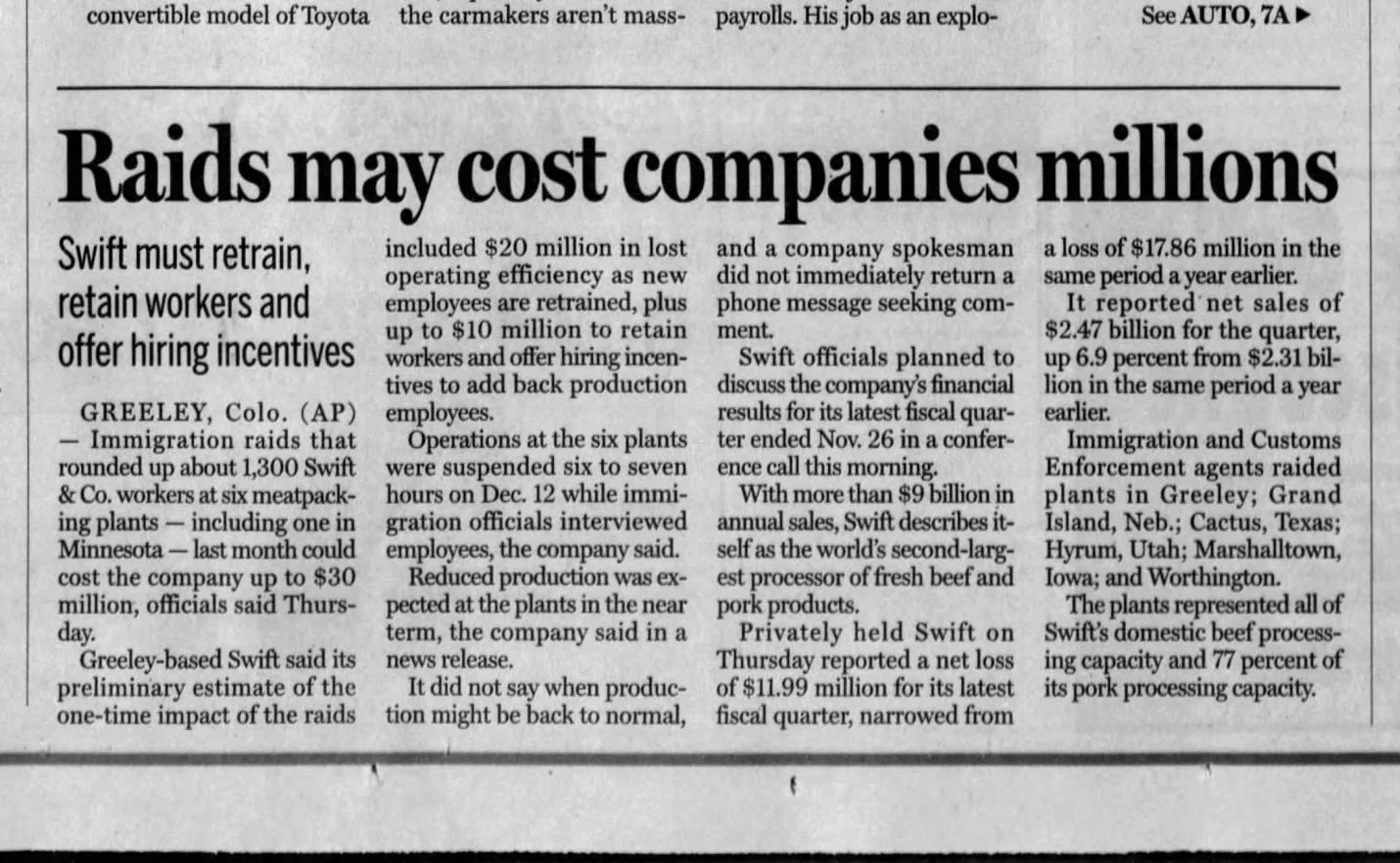
Production Plummeted: With over 10% of their workforce gone instantly, and the second shift failing to show up out of fear, Swift & Co. lost $80 million in production in a matter of weeks.
National Ripples: Because Swift was such a major player, national meat production dropped by 9%. This created a "lose-lose" scenario: farmers got less money for their livestock because processing slowed down, while consumers paid higher prices at the grocery store.
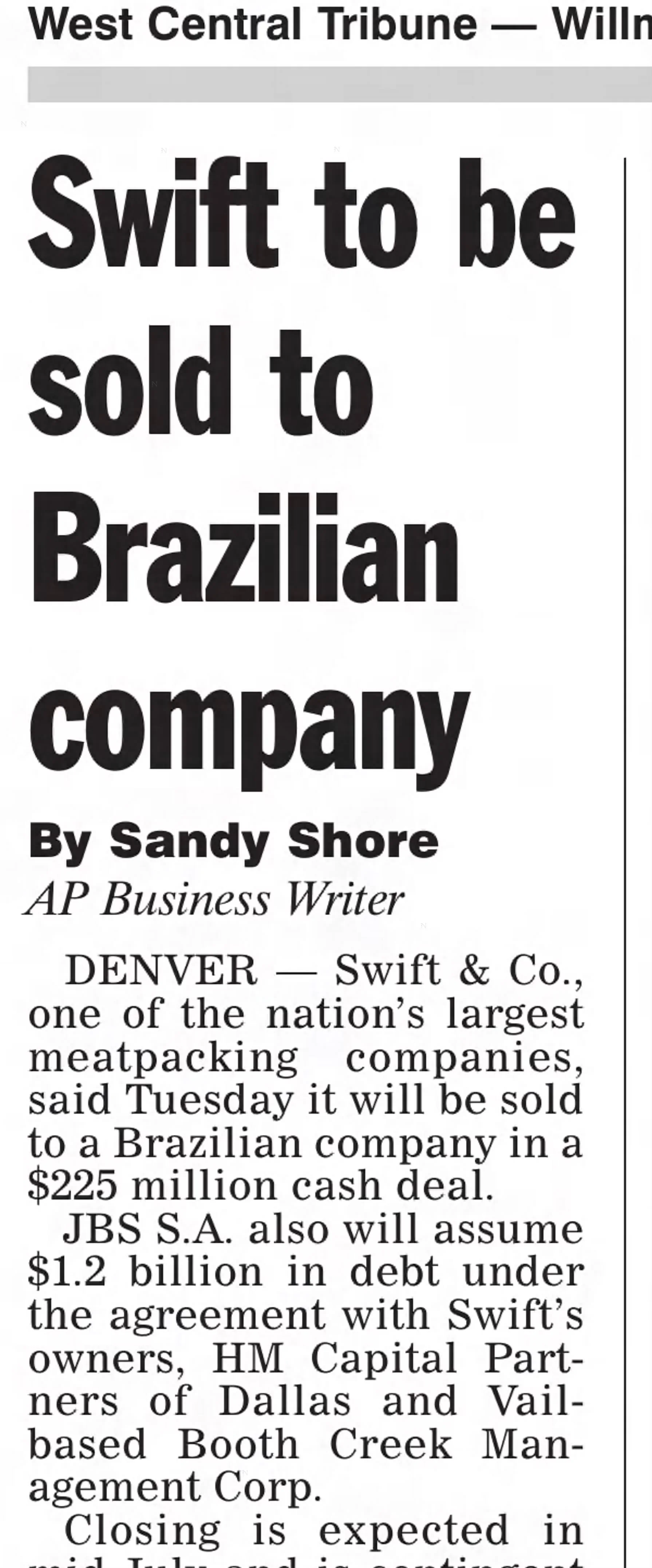
The Final Blow: Recovering was impossible. Swift spent nearly $30 million on recruitment bonuses and relocation costs to fill the gap. Ultimately, the American company couldn't sustain the hit and was sold to a Brazilian firm in 2007.

The Taxpayer Burden
We are told these raids "save" money, but the math says otherwise. At the time, the government spent roughly $15,000 per person to arrest, detain, and deport workers who were actively contributing to the local tax base.
Since the majority of the workers arrested were facing civil offenses (working without a visa) rather than criminal ones, they weren't entitled to attorneys. They were bussed out of state without hearings, a process that cost millions in federal resources while simultaneously deleting the tax revenue their paychecks once generated.
Paying the Price
The damage didn't stop at the plant gates. The town of Worthington became a shadow of itself overnight.
Main Street Dried Up: Local shops and grocery stores saw their customer base vanish.
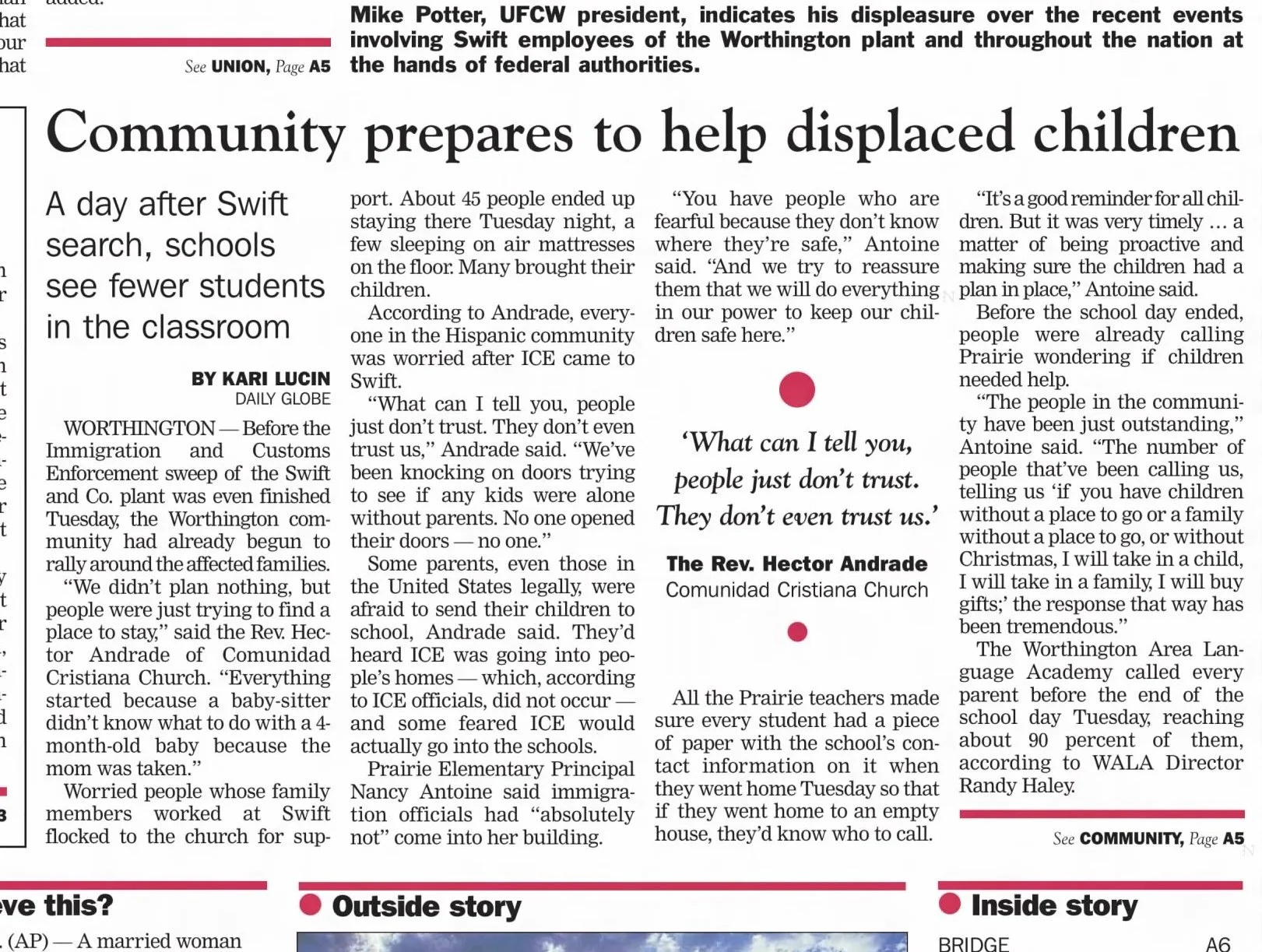
Social Safety Nets Strained: Because parents were taken without warning, the burden of emergency childcare and social services fell on local schools and churches. The federal government broke the system and left the local community to pay for the repairs.
There is a common argument that raids "free up" jobs for citizens. Worthington proved this is a fantasy.
A flood of local citizens did not rush in to fill those difficult, high-intensity roles. To keep the lights on, Swift & Co. had to pay hiring bonuses, training costs, and the cost to bus workers in daily from as far away as Sioux Falls and Minneapolis. The "savings" never materialized; only the costs grew.
A Different Reality Today
The irony? Today, Worthington is a thriving minority-majority city with families from Guatemala, Mexico, Ethiopia, Eritrea, Myanmar, and Thailand.
Crucially, 85% of these residents are now citizens. They are the business owners, the taxpayers, and the neighbors that keep the town alive. The 2006 raid was a multi-million dollar attempt to stop the inevitable growth of a community that eventually became the town's backbone anyway.
We Are Being Drained
To be clear: fraud is not okay. Using falsified documents is not okay. But we have to ask ourselves if the "cure" is deadlier than the disease.
Two thousand armed agents are not forensic accountants. They are not immigration lawyers. They are an expensive, blunt-force instrument used to solve a complex economic issue.
When we support these raids, we aren't being "saved" from a drain on our resources. We are being drained. We are losing our tax dollars, our economic stability, and our neighbors. It’s time we stop repeating the mistakes of 2006 and start looking for solutions that actually add up.
Sources:
Dianne Solis & Sudeep Reddy, "Swift Puts Raid Costs at $30M," The Dallas Morning News (Jan. 6, 2007).
Key Data: Reported $30M in immediate production losses and hiring costs; analyzed the financial instability that led to Swift's sale.
Ellinor R. Coder, "The Homeland Security Safe-Harbor Procedure for Social Security No-Match Letters," North Carolina Law Review, Vol. 86, No. 2 (2008).
Key Data: Estimated total corporate hit reached $45 million; detailed how the raids triggered a global restructuring of the beef industry.
Mark Steil, "Fear and Uncertainty in Worthington Follow Immigration Raid," MPR News (Dec. 13, 2006).
Key Data: Captured the immediate economic paralysis of local businesses and the "transportation initiative" required to keep the plant running.
Lizeth Gutierrez, "Swift and Company ICE raids, 2006," MNopedia - Minnesota Historical Society (Updated 2023).
Key Data: Confirmed that out of 239 arrested in Worthington, only 20 were criminally charged with identity-related counts (The "10% Pretext").
The Long-Term Impact & 2024 Retrospective
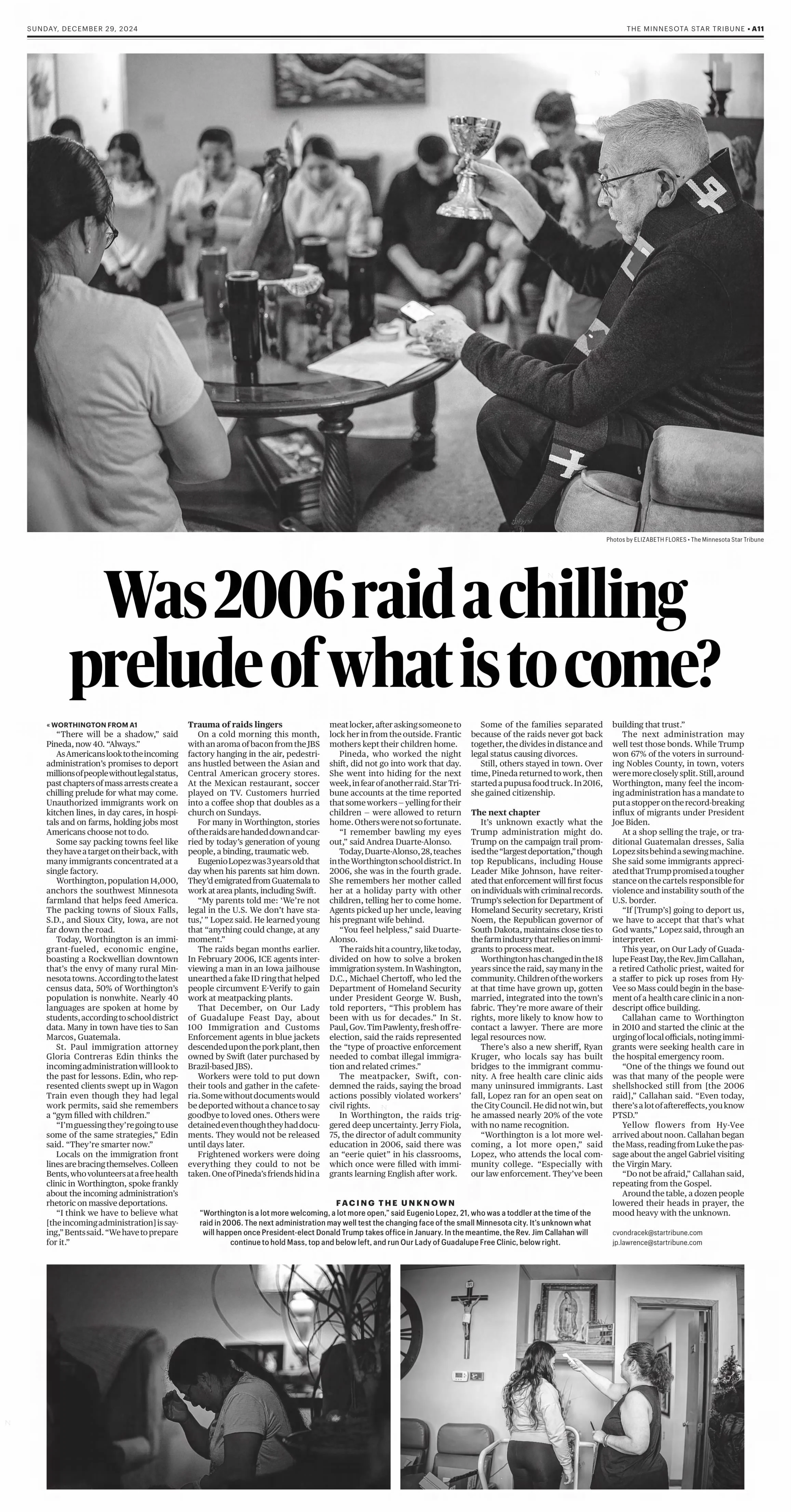
Christopher Vondracek & J.P. Lawrence, "18 years ago, federal agents raided this Minnesota meatpacking town; residents fear Round 2," The Minnesota Star Tribune (Dec. 28, 2024).
Key Data: Documented Worthington’s shift to a 50% non-white population and the "shadow" left on residents like Sandra Pineda.
Ted Genoways, Esther Honig & Bryan Chou, "How an immigration raid reshaped meatpacking — and America," High Country News (Sept. 1, 2025).
Key Data: Analyzed how the 2006 raids led meatpackers to pivot toward refugee labor and reshaped small-town demographics across the Midwest.
The 2026 "Operation Metro Surge" in Minneapolis
Susan-Elizabeth Littlefield, "What is the cost of the U.S. Immigration and Customs Enforcement operation in Minnesota?" WCCO News (Jan. 12, 2026).
Key Data: Interview with Prof. Tyler Schipper (U. of St. Thomas) revealing the $360,000 nightly hotel billand the $7,065 per-person deportation cost.
Attorney General Keith Ellison, State of Minnesota vs. U.S. Dept. of Homeland Security, Case 0:26-cv-00190 (Filed Jan. 12, 2026).
Key Data: Disclosed that the surge caused $2 million in local police overtime in just four days; argued the surge is a "federal invasion."
Dee DePass, "ICE crackdown chills sales at immigrant-owned businesses," The Minnesota Star Tribune (Jan. 16, 2026).
Key Data: Reported an 80% revenue drop for businesses on Lake Street and in the Twin Cities.
George Chidi, "Minnesota sues Trump administration to end surge of ICE agents in state," The Guardian (Jan. 12, 2026).
Key Data: Detailed the fatal shooting of Renee Nicole Good and the local government's legal response to federal "retaliation."
Broad Economic & Policy Impact
Center for American Progress (CAP), "What Would It Cost to Deport 11.3 Million Unauthorized Immigrants?"(2015/Updated 2024).
Key Data: Estimated the unit cost of mass enforcement at $10,070 per person.
UNC School of Law, "The Cost of ICE's Policies and Practices" (2019).
Key Data: Used the Postville raid as a benchmark to show a single-day raid cost taxpayers $5.2 million(approx. $14k per arrest).
Social Security Administration, The Earnings Suspense File Report (Annual).
Key Data: Confirms that undocumented workers contribute roughly $13 billion annually to the Social Security Trust Fund through unmatched payroll taxes.